Best Welding Electrodes for Stainless Steel: Top Picks for 2026
Choosing the right electrode is essential for strong, corrosion-resistant stainless steel welds. The E308L-16 and related alloys are designed for austenitic stainless grades, offering good weld quality across all-position welding with low spatter and easy slag removal. This guide highlights five reliable options from trusted brands, emphasizing compatibility with common stainless steels like 304L and 316L, slag ease, and arc stability. Use the buying guide to compare options based on diameter, length, and welding needs.
| Product | Brand | Electrode Type | Approx. Size | Highlights |
|---|---|---|---|---|
| YESWELDER E308L-16 14″ x 1/8″ | YESWELDER | E308L-16 | 14″ x 1/8″ | All-position, smooth arc, low spatter |
| YESWELDER E308L-16 14″ x 3/32″ | YESWELDER | E308L-16 | 14″ x 3/32″ | All-position, easy restrike |
| SÜA E308L-16 14″ x 1/8″ (2 LB) | SÜA | E308L-16 | 14″ x 1/8″ | Low carbon, x-ray quality welds |
| SÜA E308L-16 12″ x 3/32″ (2 LB) | SÜA | E308L-16 | 12″ x 3/32″ | Easy strike, low spatter |
| Blue Demon E308L-16 12″ x 1/16″ (1 LB) | Blue Demon | E308L-16 | 12″ x 1/16″ | Low carbon, AC-DCEP compatible |
YESWELDER E308L-16 Stainless Steel 14″ x 1/8″ Electrodes

Model: E308L-16 is designed for stainless steel welding, widely used in fabrication, maintenance, and repair work. Features include all-position welding, suitability for unstabilized stainless steels, and a smooth arc with low spatter and self-peeling slag. This makes it a versatile choice for 304L and similar grades, with predictable performance in various positions and field conditions.
YESWELDER E308L-16, 14″ x 3/32″ Electrodes

Model and purpose align with stainless steel fabrication and maintenance tasks. The electrodes offer all-position welding and are recommended for welding unstabilized stainless steels. Users can expect a smooth arc, low spatter, and a self-peeling slag, contributing to clean welds with dependable joint quality across thicknesses.
SÜA E308L-16, 14″ x 1/8″ (2 LB)

All-position welding of low carbon 19% chromium – 9% nickel austenitic stainless steels such as 304L, as well as stabilized grades like 321 and 347. The electrode maintains a maximum carbon content of 0.04%, preserving corrosion resistance and welding quality. It provides easy arc strike, smooth action, low spatter, and a self-peeling slag, with guidance noting electrode counts per pound on the packaging.
SÜA E308L-16, 12″ x 3/32″ (2 LB)

This electrode is favored for all-position welding of 304L and other low carbon austenitic stainless steels. It offers similar benefits to the 14″ variant, including a low carbon content of 0.04%, easy arc strike, smooth arc action, low spatter, and a self-peeling slag. The shorter 12″ length can be advantageous for tighter spaces or fixture welds.
SÜA E308L-16, 14″ x 1/8″ (2 LB)
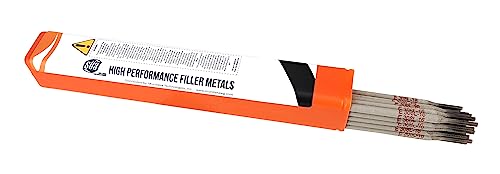
This electrode family targets all-position welding for low-carbon austenitic stainless steels. It emphasizes easy arc initiation, smooth arc, low spatter, and a self-peeling slag. The 0.04% carbon content helps maintain corrosion resistance in the weld zone, making it suitable for components exposed to corrosive environments and demanding service conditions.
Blue Demon E308L-16, 12″ x 1/16″

This electrode deposits a maximum of 0.04% carbon in the weld metal, which helps minimize chromium carbide formation and maintain corrosion resistance. It supports welding with AC-DCEP currents and adheres to AWS A5.4 specifications, offering reliable performance for stainless steel joints where a stable arc and clean welds are important.
Buying Guide
Key considerations when selecting stainless steel welding electrodes include alloy compatibility, carbon content, current types, and electrode diameter. For 304L and similar grades, E308L-16 variants are the standard choice, balancing ductility and corrosion resistance. Consider:
- Grade compatibility: Choose electrodes designed for austenitic stainless steels (types 304, 304L, 316, etc.).
- Carbon content: Lower carbon (0.04%) helps prevent sensitization and intergranular corrosion.
- Arc action and slag ergonomics: Look for electrodes with smooth arc and self-peeling slag for easier cleanup.
- Position versatility: All-position ratings are beneficial for pipe and complex welds.
- Diameter and length: Match to your weld thickness and access; thicker joints may require larger diameters.
- Compatibility with power source: Some electrodes specify AC or DC compatibility; pick according to your welder.
Compare the five options above by diameter, length, and total electrode count per package. In factory or field settings, consistency of weld quality, ease of use, and reasonable slag removal contribute to productivity and repeatability across projects.
Leave a Reply