Best UV Dye for Oil and Vehicle Leaks
Discover top UV dye options used for oil, fuel, and automotive leak detection. This guide compares chemistry, compatibility, and application notes to help you choose reliable dye for diagnosing leaks in engines, transmissions, power steering, and AC systems.
Summary of chosen products:
| Product | Brand | Volume | Key Use |
|---|---|---|---|
| A/C Pro Certified Auto Pro UV Dye | A/C Pro | 1 Oz | Oil, fuel systems; universal compatibility |
| LEAKFINDER LF2008 Automotive UV Dye | LEAKFINDER | 8 Oz | Oil, fuel, ATF, power steering |
| TSI Supercool A/C Comp Lube UV Dye | TSI Supercool | 8 Oz | R134a systems; high viscosity dye |
| TSI Supercool Synthetic UV Dye, 1 Oz | TSI Supercool | 1 Oz | Quick leak detection in cooling systems |
| UV Leak Detection Dye 1 Oz | TSI Supercool | 1 Oz | Auto & truck maintenance; UV visibility |
A/C Pro Certified Auto Pro UV Dye for Oil and Fuel Systems

The A/C Pro dye is designed for one-time application in oil and fuel systems to help reveal leaks under UV light. It works with engine oil, transmissions, power steering, and gas/diesel fuel lines and is compatible with all petroleum-based lubricants. This versatility makes it a common pick for mixed-fluid diagnostics in cars and trucks.
Key considerations: ensure compatibility with your system’s lubricant weight and confirm the dye’s compatibility with your leak-detection lamp. This dye supports quick tracing of leaks when paired with a UV flashlight.
LEAKFINDER LF2008 Automotive UV Dye

LEAKFINDER offers an ultraviolet dye optimized for automotive leak tracing. It covers oil, fuel, ATF, and power steering systems and is sold in an 8-ounce bottle. The product emphasizes bright fluorescence and compatibility with standard UV inspection lamps. A dedicated twin-neck bottle design can simplify handling for workshops.
Important notes: follow the manufacturer’s instructions for circulation time and lamp compatibility. The dye’s visibility under UV light makes pinpointing tiny leaks feasible while reducing search time.
TSI Supercool A/C Comp Lube UV Dye, 8 Oz

This product combines UV dye with a high-performance PAG formulation for R134a air conditioning systems. It includes a visible tint and delivers moisture resistance, aligning with OEM performance expectations. The package size is suitable for workshop use and repeated leak checks in cooling circuits.
Performance angles: synthetic PAG-based dye tends to hold up well under system pressures, and the dye is designed to fluoresce under standard UV inspection lights, aiding rapid identification of leak sites.
TSI Supercool Synthetic UV Leak Detection Dye, 1 Oz
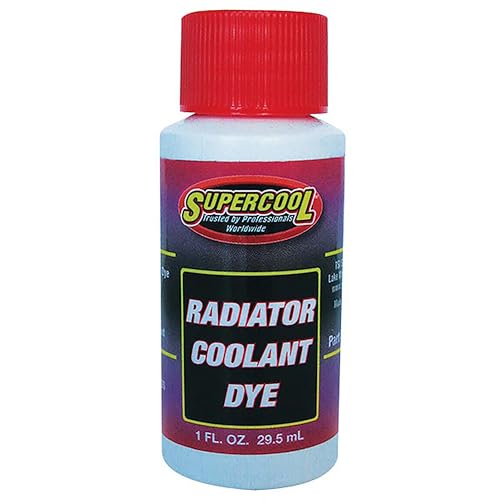
Contains UV-active dye suitable for quickly locating leaks in cooling systems. This 1-ounce bottle is designed to be economical for routine maintenance and diagnostic checks. The dye is formulated to be detectable with UV lights and is compatible with common refrigerant leak detection practices.
Usage guidance: verify system compatibility with the dye and confirm that the UV light source is appropriate for the dye’s wavelength. Use with standard leak-detection lamps for best results.
TSI Supercool UV Leak Detection Dye, 1 Oz

Another 1-ounce option from TSI Supercool, marketed for auto and truck maintenance. It emphasizes country of origin as the United States and provides a compact, easy-to-use bottle for mechanical shops and DIYers performing leak detection with UV lamps. The dye is designed for visibility in the presence of UV light across various automotive fluids.
Buying Guide: UV Dye Purchase Considerations
When selecting UV dye for oil and automotive leaks, consider these factors to ensure accurate leak detection and system compatibility:
- System compatibility: verify that the dye is suitable for the fluids in your vehicle (oil, transmission fluid, power steering, fuel). Some dyes are universal, while others are formulated for specific fluids.
- Vehicle and refrigerant type: for AC systems, check dye compatibility with R134a or other refrigerants and the viscosity of the dye relative to the lubrication used.
- UV illumination: compare dye visibility under common inspection lamps. Some products emphasize brighter fluorescence or broader wavelength compatibility.
- Volume and cost per diagnostic use: choose a bottle size that fits your typical workload and budget, especially for shops performing frequent testing.
- Safety and compatibility: review safety data and ensure dye does not react with seals, gaskets, or lubricants in your engine or components.
- Application method: some dyes circulate with fluids and leak out at leak sites; others may require flushing or circulation steps before inspection.
- Storage and shelf life: proper storage conditions help preserve dye effectiveness and prevent degradation.
Comparative overview: For DIY users, a single 1-ounce bottle that covers multiple systems can be cost-effective and convenient. For professional technicians, larger volumes with clear labeling for different fluids can speed up diagnostics and reduce dye cross-contamination. Always use a compatible UV flashlight and follow the manufacturer’s application guidelines for best results.
Leave a Reply