Best Soft Start Kits for Air Conditioners and RVs
Finding a reliable soft start kit can protect your air conditioning system and improve startup reliability, especially in areas with limited power or off-grid setups. The following selections are among the most compatible and reviewed options for both home and RV use. This guide highlights features, compatibility, and what to consider when choosing a kit for your cooling system.
Summary of chosen products
| Product | Brand | BTU / Capacity | Key Benefit |
|---|---|---|---|
| MICRO-AIR EasyStart Flex 398 | MICRO-AIR | Up to 6 tons (72,000 BTU) | Advanced microcontrol; works with generators; 75% startup current reduction |
| MICRO-AIR EasyStart Breeze 399 | MICRO-AIR | RV AC up to 13k–15k BTU | Compact, quiet startups; suitable for RV setups |
| SoftStart Home | SoftStartRV By NetworkRV | Up to 6 Tons (72,000 BTU) | 70% reduction in startup current; off-grid and generator friendly |
| Coleman-Mach Soft Start Kit | MAXXAIR | Fits Coleman-Mach 45000/47000/48000 | 75% startup amperage reduction; easy exterior install |
| SpartanStart | Spartan Power | RV A/C up to 20,000 BTU | Inverter/generator switching; anti-stall and preload features |
MICRO-AIR EasyStart Flex 398 — Smart Soft Start Kit

The EasyStart Flex 398 is designed for residential units up to 6 tons and clusters well with generators and inverters. Its installation kit supports straightforward setup, reducing startup stress on compressors and extending unit life. The system claims up to 75% reduction in startup current, helping to stabilize power use in areas with variable electrical supply. It supports two-stage compressors and heat pumps, offering broad compatibility for various cooling configurations.
MICRO-AIR EasyStart Breeze 399 — RV Soft Start
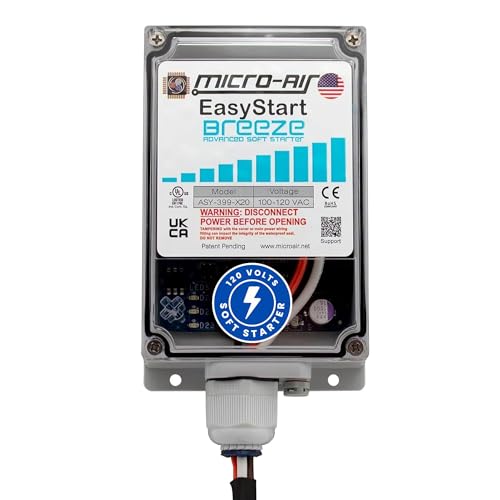
The Breeze 399 is tailored for RV air conditioners, handling 13k–15k BTU units while remaining compact for travel setups. It’s designed to run with a 2200-watt generator and can power two A/Cs on a 30-amp system, making it a practical option for travelers who need quieter, smoother startups with limited power.
SoftStart Home — Soft Starter for A/C & Heat Pumps
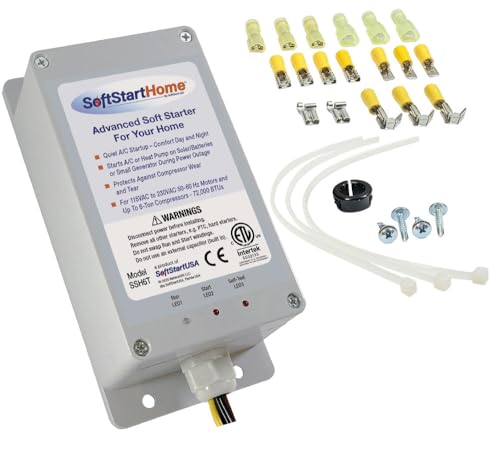
SoftStart Home focuses on reducing startup current up to 70%, helping prevent voltage fluctuations and flickering lights. It’s positioned for home use, including compatibility with generators, RVs, and solar power systems. The kit aims to extend compressor life by lowering startup stress and supporting reliable operation during outages or while on limited power sources.
Coleman-Mach Soft Start Kit
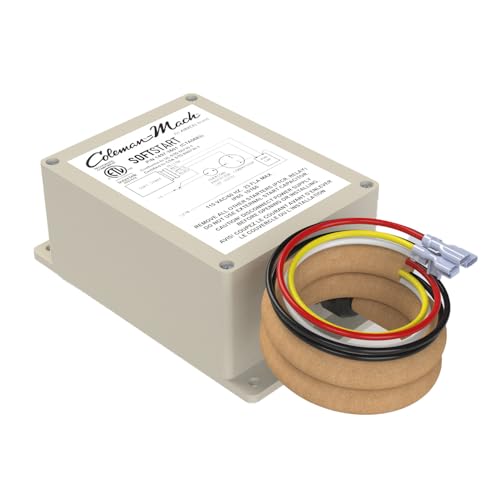
The Coleman-Mach Soft Start Kit is designed for specific Coleman-Mach air conditioners and heat pumps. It reduces startup amperage by up to 75% and incorporates a unibody enclosure to shield the unit from environmental exposure. The installation is described as exterior-ready, maintaining the aesthetic of the AC unit while improving performance and longevity through smoother ramping of power.
SoftStartRV Soft Start for RV A/C

SoftStartRV emphasizes compact design and waterproofing for RV climates. It claims to support starting up to 36,000 BTU with a 2200W generator, and can handle multiple appliances starting simultaneously on limited power sources. The product focuses on reducing noise and vibration during startup, contributing to a quieter, more comfortable RV experience.
Wodli Soft Start Kit for RV A/C

The Wodli kit targets RV, van, and camper applications, enabling a 15,000 BTU A/C to operate with a 2200W generator while also powering other appliances. It emphasizes reducing startup current by 65%–70% to lower stress on the compressor, minimize trips, and extend equipment life. The kit is designed for compatibility with limited power setups and 20A to 30A hookups.
SpartanStart — Soft Start for RV A/C

SpartanStart provides soft-start capability for RV air conditioners up to 20,000 BTU. It includes features aimed at preventing generator duress during startup and supports seamless transitions between power sources, including inverter and campsite power. The package typically includes multiple connectors and mounting aids for a straightforward install, with a focus on reliability in remote or off-grid settings.
Buying Guide: Key Purchase Considerations
When selecting a soft start kit for air conditioners or heat pumps, consider the following factors to match your installation and power needs:
- System compatibility: Verify BTU capacity and whether the unit is a heat pump, two-stage compressor, or single-stage. Some kits target RV applications, while others are designed for home use.
- Startup current reduction: Look for stated inrush current reduction percentages (common ranges are 65%–75%). Higher reductions can help with generator or limited-power scenarios.
- Power source compatibility: Assess whether your setup uses home power, a generator, inverter, or solar. Ensure the kit supports the power source you rely on.
- Installation considerations: Check whether the kit includes installation hardware, enclosure protection, and exterior mounting options. Consider ease of install if you’re DIY installing on an exterior unit or in an RV compartment.
- Noise and vibration: Quiet startups are especially important for living spaces and RV interiors. Look for features that reduce compressor strain and mechanical noise.
- Protection features: Short-cycle protection, motor reversal protection, and preload features can improve long-term compressor health and reduce nuisance trips.
- Physical footprint and compatibility with multiple units: If you operate more than one A/C or a heat pump, consider whether the kit supports multiple devices or requires separate units.
- Warranty and support: Prefer products with clear documentation, installation support, and a reasonable warranty period for peace of mind.
Perspective and trade-offs:
- Home-focused kits usually emphasize compatibility with larger air conditioners and heat pumps, prioritizing robust ramping and long-term compressor protection for stationary setups.
- RV-oriented kits tend to emphasize compact size, low-profile installation, and operation under limited power conditions, often with 30A or 20A hookups.
- Budget-conscious buyers may prioritize simpler installations and moderate inrush reductions, while premium options may offer broader compatibility and stronger startup current reductions.
In practice, select a kit that matches your primary use case (home vs. RV), guarantees compatibility with your BTU rating, and provides a clear installation path with the power sources you commonly use. Always ensure proper mounting, wiring, and safety steps align with local regulations and the device’s installation manual.
Leave a Reply