Best pH Meters for the Food Industry
The food industry relies on precise pH measurements to ensure safety, texture, flavor, and shelf life. This guide reviews five reliable digital pH meters designed for food testing, fermentation, canning, and dairy processing. Each option emphasizes accuracy, ease of use, and suitability for semi-solid and solid food samples. Read on to compare performance, calibration needs, and applicability to hot sauce, sourdough, cheese, and more. Below is a quick summary table of the chosen products to help you decide quickly.
| Product | Best Use | Calib. Kit | Sample Type |
|---|---|---|---|
| GIDIGI pH Meter Food Digital Electronic pH Tester | Fermentation, dairy, semi-solids | Included | Semi-solids, sauces |
| pH Meter for Food Digital pH Meter for Fermentation Hot Sauce | Fermentation, hot sauces, dairy | Included calibration kit | Semi-solids, liquids |
| Apera PH60S Food pH Pocket Tester | Cheese, meat, sauces, liquids | Auto calibration with ATC | Solid and liquid foods |
| YINMIK Digital pH Meter for Food | Fermenting, sourdough, sausages | Calibration solution kit | Meat, dairy, fermented foods |
| EZTOCH Food pH Meter | Canning, sourdough, brewing | Noted Bluetooth support and calibration | liquids and solids |
GIDIGI pH Meter Food Digital Electronic pH Tester

The GIDIGI Food pH tester is designed for direct measurement in semi-solid foods and dairy. Its spear-tip design with a PVDF body and open junction minimizes clogging from proteins and solids, providing more stable readings in products like sourdough, yogurt, and hot sauces. The instrument is marketed for culinary fermentation, including sauces, cheese, and beverages. Users can rely on an open junction to reduce interference from particulates, making it suitable for testing fermentation batches or dairy-based sauces. Calibration is straightforward with included buffers to maintain accuracy.
In practice, this meter supports accurate pH measurement through fermentation processes and can assist in achieving desired pH targets for shelf stability. The product emphasizes accurate hot sauce testing, noting typical target ranges around pH 3.4 for optimal preservation. This is particularly valuable for small-batch producers who need precise readings to avoid guesswork during recipe development. The durable probe and clear display help food teams monitor changes across batches with minimal downtime.
Considerations: The spear-tipped design is ideal for solids and semi-solids but may require cleaning attention after testing strongly viscous samples. For best results, ensure proper calibration with the included buffers before each use and store the meter with the protective cap to preserve probe moisture. Overall, it’s a capable choice for fermentation and dairy-focused tasks in a production or home-kitchen setting.
pH Meter for Food Digital pH Meter for Fermentation Hot Sauce
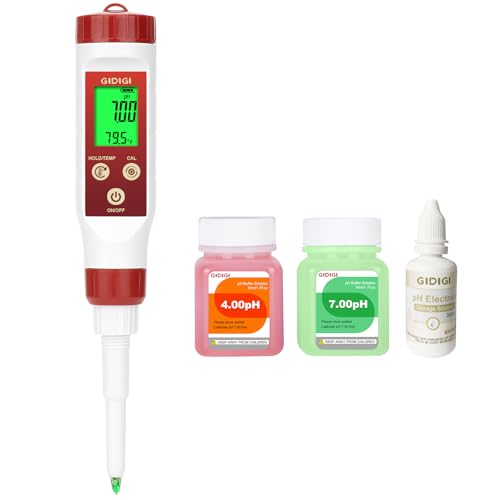
This GIDIGI model focuses on fermentation workflows and provides a clear digital readout for pH and temperature. The kit includes calibration buffers (7.00 and 4.00) to simplify bringing the instrument to accuracy out of the box. The spear tip design is suitable for testing cheese, yogurts, and other semi-solid samples, while still handling liquids well. A robust probe and ATC features help maintain stable readings across a range of ambient temperatures common in kitchens, fermentation rooms, or small production facilities. The valve-like robust build makes it suitable for repeated daily use in food processing environments.
Stability and reliability are central to this meter’s appeal. The calibration kit eliminates one of the most common hurdles—ensuring that readings reflect the true pH of your samples. The device has a straightforward user interface, with readable display and quick calibration steps. For teams developing recipes or monitoring fermentation progress, this meter offers a practical blend of accuracy, simplicity, and value.
Buying considerations include ensuring you have spare calibration solutions handy and that you follow a regular calibration schedule to minimize drift. It’s best for operators who need dependable measurements for fermentation batches, hot sauces, and semi-solid foods like cheese or yogurt during processing.
Apera PH60S Food pH Pocket Tester

The Apera PH60S is a premium pocket tester with Swiss spear pH electrode technology and a long-life reference system. It’s designed for test scenarios across cheese, sushi rice, meat, fruit, dairy, and sauces. The device supports auto-calibration and automatic temperature compensation (ATC), which helps maintain accuracy across varying lab or kitchen conditions. A standout feature is the high/low value alarm with a red backlight, attracting attention to readings that require action. This makes it suitable for quality control in small-to-mid-sized food operations where precise pH control is critical.
From a workflow perspective, the PH60S integrates easily into standard QA processes. The replaceable spear sensor means shorter downtime and fewer instrument replacements. The red-backlit display aids in dim environments, such as walk-in coolers or prep rooms. If your operation prioritizes reliability, ease of calibration, and robust performance for solids and liquids, this model is worth considering.
Potential considerations include a higher upfront cost and the need to manage replacement probes. Proper cleaning and storage are essential to preserve electrode life, especially in highly viscous or protein-rich foods. For teams requiring consistent measurements for multiple product lines, the PH60S offers a durable and precise option with strong support for regulated food testing environments.
YINMIK Digital pH Meter for Food

YINMIK’s digital pH meter targets the needs of fermented foods, doughs, and general food testing. It emphasizes a spear pH probe that easily penetrates meat, fruit, and plant samples without damaging the glass sensor. The device is positioned for professionals who measure pH in sauerkraut, kimchi, sourdough, sausages, and dairy products. It provides typical accuracy around ±0.1 pH and supports ATC to maintain stable readings across temperature variations. A notable feature is the protective cap with a wet sponge and KCl solution, designed to extend probe life by keeping the tip moist for longer periods of testing.
For production environments, this meter offers a practical balance of affordability and dependable performance. It’s suitable for part-time small-scale producers as well as larger kitchens seeking a reliable fermentation gauge. The kit’s accessories help ensure regular calibration and smooth operation throughout batches, reducing the risk of pH drift affecting product safety or texture development.
Keep in mind that while the YINMIK meter is versatile, users should follow calibration prompts and clean the spear tip after testing to prolong probe life. Its suitability for sourdough and other fermented foods makes it a strong choice for bakeries or small fermentation teams focusing on consistent acid levels in doughs and sauces.
YINMIK Food pH Meter With Extra Replaceable Probe

This YINMIK model adds value by including an extra pH probe, enabling quick replacement and reduced downtime. The meter is designed to deliver stable readings with ATC, engineered to handle hot days and cold environments without sacrificing accuracy. The cap contains a moisture-rich sponge with KCl, supporting probe longevity in regular testing cycles. It’s particularly useful for sourdough testing and meat processing, where repeated measurements across batches are common.
From an operational perspective, buying with an extra probe can save time and money in busy kitchens or food production settings. The automatic calibration feature, along with a replaceable probe, makes this model appealing for teams seeking ongoing reliability with minimal disruption. While it remains a consumer-grade instrument, its robustness and accessory bundle position it well for small commercial use and serious home bakers who test a high volume of samples.
Digital Food pH Meter YINMIK With Calibration Kit

YINMIK’s Digital pH Meter with a calibration kit focuses on delivering ready-to-use accuracy. It includes 4.00 and 7.00 calibration solutions, addressing a broad pH testing range suitable for dairy, fermentation, and general food testing. The ATC system helps stabilize readings under fluctuating temperatures, while the protective cap area houses a moisture reservoir, contributing to probe protection and longevity. The one-click calibration workflow aims to reduce downtime and speed up routine checks in busy kitchens or labs.
For a production environment focused on quality control, this model reduces setup friction and ensures that ongoing batches align with target pH values. Users should maintain an orderly calibration schedule and replace probes as recommended to avoid drift. The instrument’s versatility—along with included calibration fluids—makes it a sensible option for researchers, bakers, and small-scale manufacturers who test a wide range of foods and fermentation products.
Buying Guide: Key Considerations For Choosing The Right Food pH Meter
- Sample type compatibility: Look for spear-tip probes and open junction designs if your tests involve semi-solids, dairy, sauces, and viscous samples.
- Calibration and stability: Kits that include calibration buffers (commonly 4.00 and 7.00) and ATC help ensure accurate readings across temperature swings in kitchens or production areas.
- Measurement range and accuracy: A pH range from 0 to 14 with accuracy around ±0.1 pH suits most food-testing needs; some models offer ±0.01 pH for high-precision requirements in cheese or dairy processing.
- Durability and cleaning: Food testing can involve sticky or fatty residues; choose probes with easy cleaning and robust housings, plus moisture-sealing caps to extend probe life.
- Data logging and readability: Readouts with backlighting, quick calibration prompts, and simple interfaces reduce operator error and speed batch processing.
- Accessory ecosystem: Extra probes, replacement caps, and calibration solutions add value, especially in high-volume environments where downtime must be minimized.
- Bluetooth or app features: Some meters offer Bluetooth data logging or smartphone integration, beneficial for traceability and QA record-keeping in modern facilities.
- Cost vs. reliability: Higher upfront costs may be justified by longer probe life, better accuracy, and easier maintenance in busy kitchens or small production lines.
When evaluating options, align the meter’s capabilities with your primary use cases—fermentation projects, canning and preserving, dairy processing, or meat and cheese testing. Consider whether you need auto-calibration, ATC, or interchangeable probes. For small businesses, a balanced package with calibration solutions, spare probes, and user-friendly operation can reduce downtime and improve product consistency over time.
Leave a Reply