Best Wind Turbine Motors for Home Projects and Education
Exploring wind energy at home is a practical way to understand renewable power. This guide highlights five reliable wind turbine motor kits and mini generators suitable for classrooms, workshops, or hobby projects. Each product section explains core features, ideal use cases, and how it helps learners grasp energy conversion from wind to electricity. The selection emphasizes durability, ease of use, and safe, hands-on experimentation with small-scale wind power systems.
Summary of Selected Products
| Product | Brand | Ideal For | Key Benefit |
|---|---|---|---|
| Wind Power V4.0 STEM Kit | Thames & Kosmos | Education, outdoor use | Real 3-foot turbine for electricity generation |
| Mini Generator Motors 3V-12V | EUDAX | DIY projects, experiments | Compact motors with multiple voltages |
| 6 Set Mini Generator Motors | Sntieecr | Classroom kits, science fairs | Multi-volt, varied vanes for learning |
| 120V DC Motor Wind Turbine Generator | RIYIN | Advanced experiments | Higher voltage wind generation demonstration |
| SWONVI Micro Wind Turbines | SWONVI | DIY demonstrations | Small, assemble-yourself turbine kits |
Thames & Kosmos Wind Power V4.0 STEM Kit
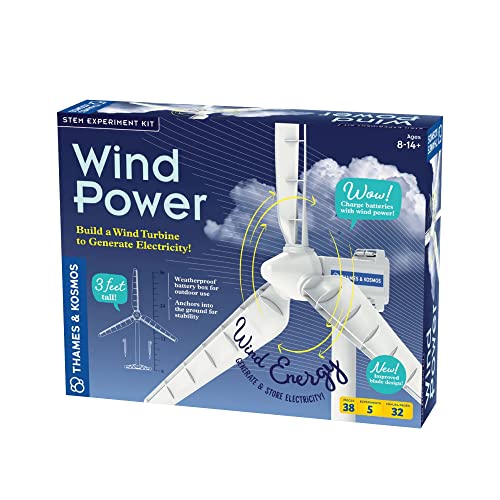
The Thames & Kosmos Wind Power V4.0 STEM Kit provides a real, working 3-foot wind turbine for hands-on electricity generation. It emphasizes renewable energy concepts, such as wind’s role in clean power, and features a single-piece turbine blade design for improved aerodynamics and durability. The kit enables users to generate electricity to charge a battery and power a small model car, making it suitable for classroom demonstrations and outdoor experiments.
EUDAX Mini Generator Motors 3V-12V DC Motor

Designed for small-scale wind or manual wind-up experiments, this EUDAX motor features multiple voltage ratings (3V, 4.5V, 12V) and high RPM values (up to 6500 RPM). Its compact dimensions (about 24mm diameter) make it ideal for classroom demonstrations, DIY toys, and mini wind turbines where space is limited. Suitable for students learning about energy conversion and motor-to-generator relationships.
Sntieecr 6 Set Mini Generator Motors
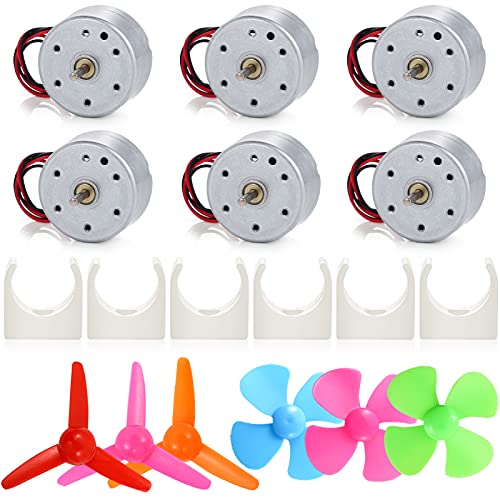
This beginner-friendly kit includes six mini DC motors, motor mounting brackets, and multiple propeller configurations. It demonstrates two-way energy conversion: movement generates electricity, and supplied power can drive motor rotation. With voltages tuned to 3V, 4.5V, and 12V, learners can observe how wind speed translates to different electrical outputs, making it a versatile option for physics labs and STEM activities.
120V DC Motor Wind Turbine Generator
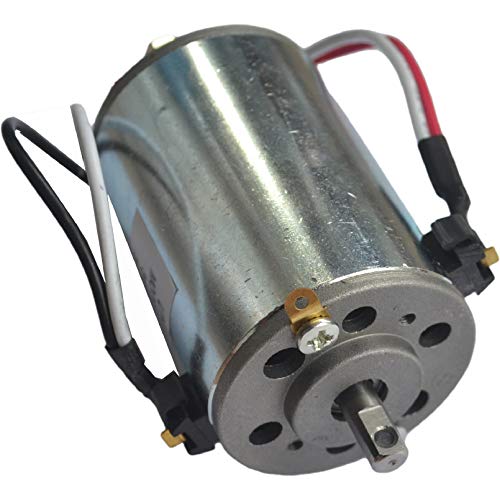
This high-voltage wind turbine generator illustrates wind-to-electricity conversion at a higher level, featuring a 120V output and a 50W power rating. It’s a valuable addition for advanced demonstrations or small research projects where learners explore higher voltage systems, bearings, and efficiency under varying wind conditions.
QX Electronics Micro Wind Generator

This compact micro wind generator offers an AC output option and a very small footprint for experiments in energy conversion at low wind speeds. It’s suitable for instructors who want to demonstrate basic turbine-to-generator concepts without large equipment, and for hobbyists building tabletop wind power systems.
SWONVI Mini Wind Turbine Kit

The SWONVI kit includes two small DC motors, multi-vaned propellers, and a simple mounting assembly. It is designed for hands-on learning, enabling students to assemble a wind turbine and observe how changes in blade design and wind speed influence electrical output. A practical option for science fairs and classroom demonstrations in energy studies.
EUDAX 6 Set Mini Generator Motors

This 6-piece kit extends the basic mini motor concept with multiple motor variants, propeller options, LEDs, and connectors. It supports deeper experiments into voltage-speed relationships and generator behavior under different loading conditions. A robust choice for classroom sets or student-led projects exploring wind energy concepts.
Buying Guide: Key Purchase Considerations
- Application goals: Choose kits that align with your learning objectives—basic concepts for beginners or higher voltage systems for advanced exploration.
- Scale and compatibility: Ensure the kit’s physical size, connectors, and voltage range fit your intended experiments or demonstrations.
- Durability and safety: Look for durable housings, weather-resistant designs for outdoor use, and safety features for hands-on activities with students.
- Educational value: Prefer kits with clear, experiment-oriented instructions, energy conversion explanations, and data-collection opportunities.
- Expandability: If you plan to scale up, select products that include modular parts (additional blades, mounts, or motors) to grow demonstrations over time.
- Price-to-value: Compare the number of components, included accessories, and the range of voltages to assess overall value for educational settings.
This selection emphasizes practical experiments that illustrate how wind transforms into electricity, while providing varied complexity to suit different age groups and learning environments. When assembling or operating these kits, ensure supervision for younger students and follow any safety guidelines included with each product.
Leave a Reply