Best Mold Release for Concrete: Top Picks for Smooth Finishes and Easy Demolding
Choosing the right mold release is essential for achieving clean, detailed concrete finishes without sticking or staining. The following picks represent reliable, user-friendly options designed for concrete forms, precast molds, and DIY projects. Each product is evaluated for ease of use, safety, and residue-free release to help you select the best option for your project.
| Product | Brand | Volume | Key Benefit |
|---|---|---|---|
| Akona Concrete Form Release (1 Gallon) | Akona | 1 Gallon | Versatile, easy application, white release for visible coverage |
| Formcoat WB250 Concrete Form Release | DCP | 1 Gallon | Non-staining, residue-free, solvent-free |
| Smooth-On Universal Mold Release | Smooth-On | 14 Fl oz | Engineered for mold making with many liquids |
| Mitreapel Silicone Mold Release Spray | Mitreapel | 14.4 oz | High silicone content for silicone and rubber molds |
| Quality Chemical Q-Cote (128 oz, Pack of 2) | Quality Chemical | 128 oz | Paraffin-based, slip-resistant, textured finishes |
Below you’ll find detailed product sections, each outlining why the option is suitable for concrete work, how to apply, and what to expect in terms of performance and cleanup.
Akona Concrete Form Release — 1 Gallon

Akona’s form release is designed for broad compatibility with plywood, fiberglass, aluminum, steel, urethane, and other forming materials. It eliminates mixing and prep—simply spray or pour and demold. The white-release feature helps ensure even application and visibility during use, while leaving no residue behind. This makes it a solid all-purpose option for concrete forms, tubes, sculpture molds, and casting projects, especially when you need a straightforward workflow in both workshop and jobsite environments.
Application tips: Apply evenly in a light mist or thin coat to avoid pooling. For larger forms, coverage per gallon is robust, reducing reapplication frequency. After demolding, any trace residue is typically easy to wipe away with a damp cloth. The non-staining formula helps protect surfaces that will be polished or sealed later in the process.
Formcoat WB250 Concrete Form Release — 1 Gallon
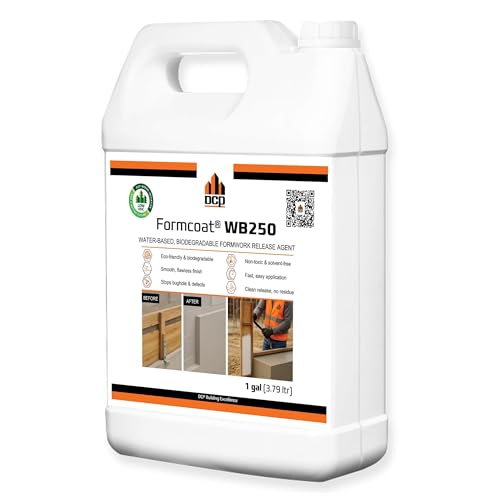
Formcoat WB250 is a professional-grade, non-staining mold release engineered to minimize residue while delivering clean, architectural-quality concrete surfaces. It’s formulated to work on wooden, plastic, and metal molds, making it suitable for precast plants, commercial projects, and DIY jobs. Importantly, this release is free from solvents, diesel oil, kerosene, waxes, and silicones, and it is VOC-compliant in the U.S. and Canada, promoting safer use in varied work environments.
Why it stands out: Reduced cleanup time, less risk of staining, and compatibility with multiple mold materials. For larger batches or production settings, its consistent performance can help maintain uniform surface textures and release characteristics across many casts.
Smooth-On Universal Mold Release — 14 Fl Oz

Designed for mold making and casting, Smooth-On’s Universal Mold Release performs well with many liquid rubbers and plastics. It effectively releases rubber and polyurethane materials from properly prepared models. The product note highlights that certain porous models—such as wood, plaster, concrete, or stone—may require sealing beforehand to ensure the release performs optimally. This makes it a reliable pick for intricate molds where detail preservation is critical.
Usage guidance: For porous substrates, apply a compatible sealer like Smooth-On SuperSeal before releasing. On non-porous surfaces, you can apply directly with a light, even coat. This product is ideal when your project involves a mix of mold types or when you need a release compatible with several elastomerics.
Mitreapel Silicone Mold Release Spray — 14.4 oz

Mitreapel’s silicone-based spray is formulated to work well with epoxy resins and silicone or rubber molds. The high silicone content enhances non-stick performance, making demolding easier and reducing the risk of tearing or distortion in detailed molds. The formula is designed for easy application and is particularly well-suited to craft rooms and workshops where silicone or rubber molds are common.
Tips for best results: Ensure molds are clean and dry before application. Apply a thin, uniform layer and allow it to dry if needed, depending on your mold material and resin chemistry. This product is especially helpful for resin or urethane casting where precise release is paramount to preserve fine features.
Quality Chemical Q-Cote — Paraffin-Based Release (128 oz, Pack of 2)

Q-Cote is a paraffin-based mold release designed to create a slip-resistant, nonstick surface for stone, stepping stones, garden molds, and stamped concrete. It’s easy to apply—pour and spread with a brush or roller—and is compatible with several application methods, including pump-up sprayers and airless sprayers. The paraffin content helps produce unique textures that can enhance the finished product’s aesthetic.
Performance notes: It provides reliable release while enabling texture variation in your castings. For best results, apply evenly to avoid pooling and ensure full coverage of detailed areas. The pack of two offers extended usage for larger projects or multiple molds, balancing cost with versatility.
Buying Guide: Key Considerations For Concrete Mold Releases
To choose the right mold release for concrete, consider the following factors:
- Material compatibility: Ensure the release works with your mold type (wood, plastic, metal, silicone, urethane) and your casting material (concrete, epoxy, polyurethane, resin).
- Residue and staining: Select a formula described as non-staining or residue-free if a clean demold is crucial for subsequent finishing steps.
- Ease of application: Look for releases that spray or pour easily, with good coverage and minimal prep or cleanup.
- Safety and VOCs: Favor solvent-free or VOC-compliant options for safer use in varied environments, especially indoors or on large projects.
- Texture and finish: For textured or decorative molds, consider paraffin-based or specialized releases that influence surface texture or patina.
- Volume and economy: Larger volumes reduce reapplication frequency on big jobs; consider packs that fit your project scale.
- Specific use cases: Some releases excel with epoxy, silicone molds, or urethane casting—match your project’s material workflow.
For best results, follow product-specific directions for surface preparation, application thickness, and curing times. Always test a small area on new materials to confirm release performance before proceeding with an entire mold or batch.
Leave a Reply