Best Laser Marking Machines for Plastic Printing and Personalization
Choosing the right laser marking machine for plastic requires weighing power, safety, and versatility. This guide spotlights five strong options that handle plastic engraving and marking with efficiency, depth, and portability. Each model offers different power levels, software support, and enclosure features to fit hobby projects or small business needs.
| Product | Brand | Key Benefit |
|---|---|---|
| xTool F1 2-in-1 | xTool | Dual laser, portable and smokeless |
| MR. CARVE S4-20W | MR. CARVE | High power fiber laser for metals and plastics |
| ACMER S1 | ACMER | Affordable beginner-friendly with multiple power options |
| Woxcker L2 MAX | Woxcker | Enclosed design with high-speed engraving |
| GWEIKE G2 Pro 30W | G·WEIKE | Deep engraving and 3D capabilities |
The following sections summarize each model’s primary strengths for plastic marking, including how they handle common plastics like acrylic, ABS, polycarbonate, and PETG. Consider enclosure features, air assist, software compatibility, and real-world throughput when comparing options for your shop or maker space.
xTool F1 2-in-1 Dual Laser Engraver

The xTool F1 combines a 2W infrared laser for metal materials with a 10W diode laser suitable for wood, acrylic, and plastics. It is designed for high-speed workflows, claiming up to 4000 mm/s engraving speeds and batch-processing capabilities. A fully enclosed cover minimizes smoke and odors, with an integrated air purification concept (air purifier sold separately). Weighing 4.6 kg, its portability suits craft fairs and pop-up shops. Material versatility makes it suitable for marking plastic items like tags, cases, and consumer gadgets, where precise vector work and fast throughput matter.
Key features include dual-laser capability, a smoke-free enclosure, and a target for rapid project turnover. For plastics, the diode laser provides clean, high-contrast marks on many acrylics and colored plastics. Remember that material testing is recommended to optimize power and speed for each plastic substrate and thickness.
MR. CARVE S4-20W Fiber Laser Marking Machine
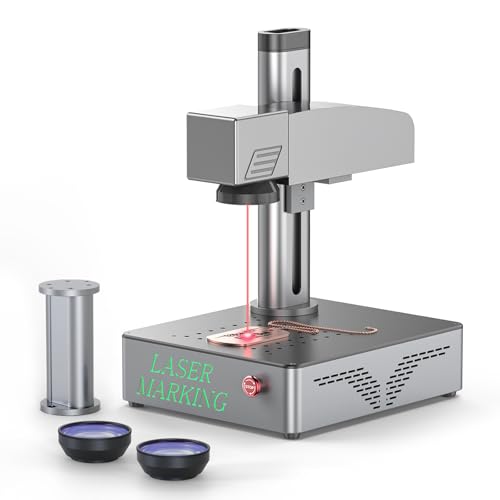
The MR. CARVE S4 uses a 20W fiber laser system designed to mark metals and certain plastics with high precision. Its Lightburn compatibility enables a familiar workflow, while supporting various file formats for engraving and marking tasks. With 150 mm x 150 mm work area and simple USB-based software, it caters to users who need reliable, repeatable marks on plastics such as caps, tags, and small housings. The unit emphasizes stability and reliability in an affordable package, making it a practical choice for entry to mid-level operations.
Typical applications include logo and text marking on plastic parts, date codes, and serials. The machine’s 1064 nm fiber laser is effective on many plastics when contrast and depth requirements are met. Users should consider ventilation and smoke management in plastics marking to maintain a clean workspace and consistent results over longer sessions.
ACMER S1 Laser Engraver For Beginners

The ACMER S1 is positioned for beginners with adjustable laser outputs up to 6000 mW and a compact footprint. It supports a wide range of materials, enabling precise engraving on wood, acrylic, leather, and plastic surfaces. The 5.1 by 5.1 inch engraving area accommodates small to medium plastic parts, while the platform’s design aims for user-friendly setup. It is compatible with popular software such as LightBurn and LaserGRBL, facilitating straightforward integration into typical hobbyist workflows.
With relatively simple parameters and an emphasis on ease of use, the S1 is suitable for hobby projects, custom nameplates, and small-batch plastic items. For plastics, users should test contrast and adjust speed and power—especially on colored plastics—to ensure legible and durable marks. The device’s portability supports on-site customization at events or markets.
Woxcker L2 MAX 5.5W Enclosure Laser Engraver

The Woxcker L2 MAX emphasizes safety and speed with a fully enclosed design and a claimed 20,000 mm/min engraving speed. The enclosure helps contain fumes and ensures safer operation when marking plastics. Its safety features, including a lid detection and flame sensor, are complemented by an integrated air assist to improve marking quality on acrylic, ABS, and PETG. The system is designed to balance performance with a compact footprint, making it suitable for small studios or home workshops.
Plastic marking performance benefits from proper focal alignment and the use of appropriate materials with laser-friendly coatings. For cylindrical plastics or flat panels, the L2 MAX’s enclosure and air assist help produce cleaner edges and sharper contrast. Users should assess workflow needs—whether fast batch marks or detailed decorative engravings—and verify compatibility with preferred marking software and file formats.
GWEIKE G2 Pro 30W Fiber Laser Engraver

The GWEIKE G2 Pro offers a 30W fiber laser with rapid 15,000 mm/s engraving speed and 0.001 mm accuracy. Its 3D embossing and deep engraving capability expand options for marking and etching on plastics like black acrylic and coated polymers, as well as metal substrates. The detachable design and portable form factor enhance usability beyond traditional workbenches, allowing flexible operation in different environments. This model targets users seeking high precision and more complex engraving effects on plastic parts, jewelry blanks, and tag components.
Software compatibility and workflow are central to its appeal, with support for a range of vector and bitmap formats. For plastic marking, compatibility with LightBurn or industry-standard drivers helps streamline production. The combination of speed, accuracy, and 3D capabilities makes it a strong choice for small businesses needing repeatable, high-quality marks on plastics and other materials.
Buying Guide: Key Factors To Consider When Choosing A Plastic Laser Marking Machine
- Laser Type And Power: Fiber lasers excel at marking certain plastics and metals, while diode and CO2 variants may be more suitable for specific plastics or coatings. For clear, durable plastic marks, consider power level and wavelength compatibility with your plastics.
- Engraving Area and Throughput: Assess your typical workpieces. A larger bed or optic field supports bigger items, but smaller devices can offer portability and lower costs. Speed (mm/s) influences batch throughput and overall productivity.
- Enclosure And Ventilation: Fully enclosed machines improve safety and reduce fumes or smoke during plastic engraving. Look for integrated air assist, filtration options, and automatic shutoffs for enhanced safety compliance.
- Software Compatibility: Ensure compatibility with common tools like LightBurn, LaserGRBL, or manufacturer software. This affects how easily you can prepare designs, import files, and execute campaigns or production runs.
- Material Compatibility: Verify which plastics and coatings are supported, as well as required markings (e.g., color contrast, laser depth). Some plastics may require pre-treatments or post-processing to achieve durable marks.
- Maintenance And Support: Check for warranties, spare parts availability, and customer support quality. A service-friendly setup minimizes downtime in business environments.
- Portability Versus Stationarity: If you need field work or pop-up shop use, consider models with lightweight frames and carry handles. For a dedicated workspace, larger, more powerful units may be preferable.
In evaluating options, compare total ownership costs, including replacement parts, filter or air purifier needs, and any required accessories such as rotary fixtures for cylindrical plastics. A balanced approach considers both initial investment and ongoing maintenance to ensure reliable plastic marking for your applications.
Leave a Reply