Best Laser Rust Removers for Metal Cleaning and Coatings
Rust removal lasers offer non-contact, precision cleaning for metal surfaces, coatings, and paints. This guide highlights five leading options designed for industrial and intermediate use, emphasizing power, scanning width, cooling, and control features. Each model provides different balances of mobility, automation, and operating complexity to fit varied workflows. The selections below are evaluated for effectiveness on rust, oil, paint, and coating removal, while aiming to minimize substrate damage and maximize throughput.
| Product | Brand | Power | Key Features |
|---|---|---|---|
| WTTTOOLS US Stock 2000 W Laser Rust Removal Machine | WTTTOOLS | 2000 W | IoT, wide scan 10-300 mm, water cooling, 8kW input, 7-inch touch screen |
| Triumph Laser Rust Remover 1500W | T TRIUMPH | 1500 W | 300 mm scan width, continuous/modulation, portable form |
| WTTTOOLS US Stock 2000 W 220V Laser Cleaning Machine | WTTTOOLS | 2000 W | 360° non-contact cleaning, long cable, red-light positioning |
| Ironsten 2000W Laser Rust Remover | Ironsten | 2000 W | Built-in chiller, continuous operation, non-contact cleaning |
| ZAC 200W Laser Cleaner | ZAC | 200 W | Portable, 0.39 mW class 1, eight cleaning modes |
Note: This overview uses product features as listed by supplier pages to inform choices. For buyers, consider how each option aligns with material types, required throughput, maintenance capabilities, and available power/cooling infrastructure.
WTTTOOLS 2000W IoT Laser Rust Remover

The WTTTOOLS 2000 W laser system is designed for heavy-duty rust and coating removal with IoT connectivity for remote parameter adjustments and real-time monitoring. Key specifications include a 1080±10 nm wavelength, a broad scanning width of 10–300 mm, and a robust water-cooling system. The unit supports continuous and modulation laser operation with a maximum modulation frequency of 20 kHz. It emphasizes safety via a double-click start mechanism and a 7-inch touchscreen for straightforward parameter changes. This model targets large-area cleaning tasks, with an emphasis on efficiency and remote diagnostics to minimize downtime.
Operational considerations include the need for a stable 220V power supply, adequate water cooling, and space to accommodate the 44 x 22.2 x 41.3-inch footprint plus weight. The IoT features enable diagnostically targeted support from after-sales teams, potentially reducing service intervals and optimizing maintenance cycles. Suitable applications span metal rust removal, paint stripping, and coating cleanup on industrial components.
Triumph Laser Rust Remover 1500W

The Triumph Laser Rust Remover offers a 1500 W laser source with a 1080±10 nm wavelength, designed for continuous or modulation operation. The device supports a scanning width up to 300 mm, and it uses water cooling to maintain stable performance during longer cleaning sessions. The unit is described as compact (17.7 x 35.4 x 27.6 inches) for easier transport in a vehicle, which could be advantageous for on-site rust removal tasks. This model emphasizes portability without sacrificing the high-power capability needed for robust rust and coating removal tasks.
Considerations include setup requirements for power supply and water cooling, as well as movement considerations given its size. Its broad scan width supports efficient coverage, but operators should assess ergonomic handling for extended cleaning sessions and ensure compatible protective gear and ventilation for byproducts of cleaning.
WTTTOOLS 2000W 220V Laser Cleaning Machine

This 2000 W laser cleaning system from WTTTOOLS features a 1080±10 nm laser, with a 160±10 mm scanning width and a 32 ft cable length for flexible reach. It supports continuous and modulation operation and uses water cooling. The unit lists a 16 L water tank capacity and a generous 14–15 L water requirement, indicating robust cooling for high-throughput operations. It’s designed for 360° non-contact cleaning, enabling thorough rust and coating removal across complex geometries while minimizing substrate contact.
Key decision points include the need for a longer cable to adapt to large components, the availability of deionized or purified water for cooling, and the practicality of maintaining a 32 ft reach in the shop or on-site environments. The model suits heavy-duty rust removal on metal parts, oil and coating stripping, and similar tasks where efficiency and substrate safety are priorities.
Ironsten 2000W Laser Rust Remover

The Ironsten model provides a robust 2000 W continuous-wave fiber laser with a scanning width up to 200 mm. It emphasizes a built-in, independent chiller to support continuous operation and stronger cooling, reducing downtime due to overheating. The system supports non-contact cleaning suitable for large-area rust, oil, and paint removal on metal surfaces. This unit is positioned for ongoing production or repair workflows where high throughput is essential and adequate cooling is critical for sustained performance.
Operational notes include ensuring compatible water quality for cooling and verifying that the installation area can accommodate the machine’s dimensions and weight. The non-contact cleaning approach minimizes substrate damage and is appropriate for rust removal on heavy-gauge metals as well as previous coatings that require careful removal.
ZAC Trolley-Type Laser Cleaner 200W
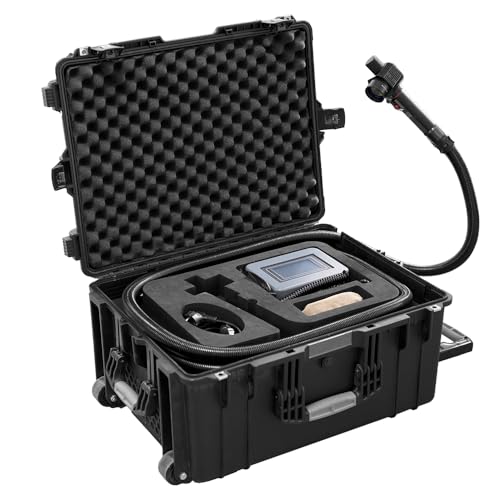
The ZAC LGC-200 offers a 200 W laser with a 0.39 mW class 1 rating, designed for portability with a trolley-style chassis. It features a handheld laser head, 5 m delivery cable length, and air cooling. Eight cleaning modes and a modular controller design provide flexible options for rust, paint, oil, and coating removal on smaller to mid-sized components. The device prioritizes ease of use, quick setup, and the convenience of plug-and-play operation, making it suitable for on-site work or smaller workshops.
Considerations for ZAC include the balance between mobility and cleaning power. While 200 W may be lower than larger industrial units, the portability and higher safety class may be advantageous for field service and quick turnaround tasks. It is best suited for rust removal on lighter coatings and smaller parts, where rapid deployment outweighs high-throughput demands.
Buying Guide: Key Purchase Considerations
- Power and throughput: Higher-wattage systems (1000–2000 W) deliver faster rust and coating removal on large metal surfaces but require more power, water cooling, and space. Lower-wattage models may be adequate for smaller parts or on-site tasks with lighter coatings.
- Scanning width and geometry: A wider scan width accelerates coverage on flat plates, while narrow widths can work effectively on complex geometries. Consider parts’ size and shape when selecting a model.
- Cooling and continuous operation: Water cooling and an integrated chiller enable prolonged cleaning without overheating. Systems with robust cooling are preferable for production environments.
- Portability vs. fixed installs: On-site rust removal benefits from portable units or trolley designs, whereas fixed machines can offer higher throughput in a shop.
- Controls and safety: Features like dual-start protection, red-light alignment, and IoT diagnostics can improve safety and reduce downtime. Ensure appropriate safety gear and enclosure for laser emissions.
- Maintenance and consumables: Some models require purified water or deionized water for cooling; assess maintenance routines and availability of replacement parts.
- Cost of ownership: Beyond the initial price, factor in energy consumption, cooling needs, and service/support timeliness when budgeting.
- Material compatibility: Verify that the machine’s wavelength and power suit the metals involved (steel, aluminum, etc.) and the coatings (paint, oil, varnish) being removed.
- On-site vs. workshop use: For frequent field work, prioritize portability, cable reach, weight, and ease of operation. For workshops, a higher-power, fixed setup may maximize efficiency.
Leave a Reply