Best Laser Engraving Machines for Glass and More: Precise Home and Studio Tools
When choosing a laser engraver for glass and other materials, key factors include laser power, precision, working area, and ease of use. The models below span mid- to high-power options with features that support detailed glass engraving, acrylic, wood, and metal projects. Whether you’re a hobbyist or a small business owner, these machines offer reliable performance, beginner-friendly setups, and the versatility needed for crafting, prototyping, and personalization.
| Product | Power / Working Area | Notable Features |
|---|---|---|
| ACMER S1 3500mW | 130×130 mm | Ultra-fine 0.04 mm spot, 2mm focal length, fast engraving |
| ACMER S1 6000mW | 130×130 mm | Higher power, same precise spot, versatile materials |
| LONGER Ray5 10000mW | 400×400 mm | ESP32 processor, large area, multiple connections |
| ACMER S1 2500mW | 130×130 mm | Balanced power, beginner-friendly, 0.01 mm precision |
| Carverall K15 Pro 5W | Near A4 size | Real 5W power, wide material compatibility, easy setup |
Note: All products listed can engrave glass and other common materials, with varying power levels, work areas, and features. Consider your typical material thickness, required speed, and software compatibility when selecting the best option for your needs.
ACMER S1 Laser Engraver 3.5W For Glass And More

The ACMER S1 3500mW laser engraver delivers high-precision engraving with 455±5 nm wavelength and a 2 mm focal length, achieving up to 10,000 mm/min and 0.01 mm repeatable positioning accuracy. Its 130×130 mm working area handles small glass pieces, wood, acrylic, and metal foils. The device is designed for a 2-in-1 engraving and cutting workflow, enabling fine-detail projects as well as clean cuts. Setup is quick, with 99% preassembly and a one-minute laser head install, making it suitable for beginners and professionals seeking efficient operation.
ACMER S1 6W Laser Engraver For Glass And More

The 6000mW ACMER S1 model increases power for deeper engraving on glass, wood, leather, and ceramics while still offering a precise 0.04 mm laser spot and a 2 mm focal length. The device retains the 130×130 mm workspace and 0.01 mm repeatable positioning accuracy, making it a strong option for more demanding glass etching and versatile DIY projects. It remains beginner-friendly with near-ready assembly and a straightforward setup.
LONGER Ray5 10W Laser Engraver With Air Assist
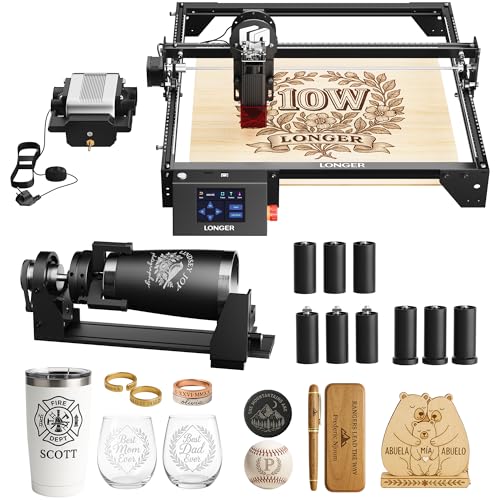
The Longer Ray5 model features a 400×400 mm working area and a 10000 mW laser module. Equipped with an ESP32 processor, it supports rapid engraving speeds up to 10000 mm/min and a precise 0.01 mm spot. It includes a touch screen, multiple connectivity options (USB, Wi-Fi, TF card, app), and an air-assisted kit with a rotary attachment for cylindrical items. This setup is well-suited for larger glass pieces and multi-material projects, offering robust flexibility for professional or serious hobbyist use.
Creality Falcon 5W Laser Engraver For Glass And More
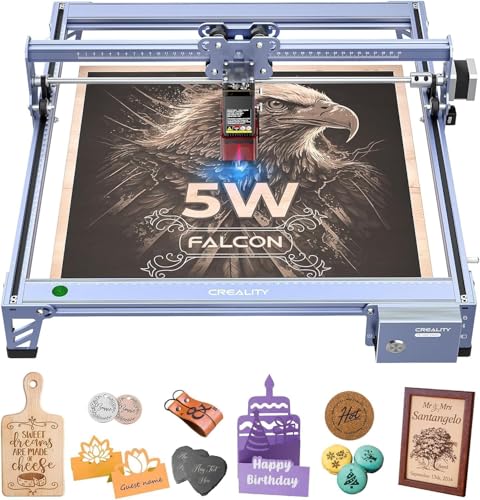
The Creality Falcon offers a 0.06 mm laser spot and precise engraving within 0.004 inches with reposition accuracy under 0.007 inches. Its 5W power supports engraving and cutting on glass, wood, leather, and acrylic, with a sizable 400×415 mm working area. The machine emphasizes productivity via a 32-bit processor and speeds up to 10,000 mm/min. Optional upgrades include a rotary roller and raisers, expanding capabilities for tall or cylindrical objects.
Usongshine TTS-55 PRO 5.5W Laser Engraver

The TTS-55 PRO upgrades to 5500 mW with a metal air-assisted nozzle and a red shield for better cutting results. It uses LD+FAC+C-Lens compression spot technology, enabling accurate engraving with a focal length of 23 mm. With a 32-bit MCU and engraving speeds up to 10000 mm/min, it supports online and offline (TF card) workflows. The module is designed to be beginner-friendly while offering robust performance for glass, metal, wood, and more.
Buying Guide: Key Purchase Considerations
- Power and material compatibility: Higher wattage enables deeper cuts and faster engraving on denser materials like glass and metal. Consider your primary materials and whether you need cutting capability in addition to engraving.
- Working area: A larger bed supports bigger glass pieces and composite projects. For small crafts, a compact 130×130 mm area may suffice, but larger projects benefit from 400×400 mm or similar.
- Precision and repeatability: Look for lasers with sub-0.01 mm precision if you require fine details on glass, jewelry, or micro-engraving tasks.
- Software compatibility: Compatibility with LightBurn, LaserGRBL, and CutLabX can influence ease of use and expansion across projects. Check offline vs online workflows and file support.
- Ease of setup and safety: Preassembled units with quick installation save time and reduce setup errors. Safety features such as enclosed housings, proper eyewear, and low-maintenance components are important for home workspaces.
- Connectivity and control: USB, Wi-Fi, TF card, and mobile app support enable flexible operation and remote monitoring. A built-in touchscreen can simplify adjustments mid-project.
- Accessories: Rotary attachment, air assist, and risers extend capabilities to cylindrical objects and taller items. Ensure availability of compatible spare parts and upgrade options.
- Maintenance and durability: Consider cooling fans, service intervals, and the availability of replacement modules. Robust build quality reduces downtime in busy setups.
- Budget and total cost of ownership: Initial price, consumables, replacement lenses, and potential software subscriptions should be weighed against your project scope and expected output.
In evaluating these options for glass engraving, prioritize models with strong focus on precision, reliable power, and user-friendly software ecosystems. If your work involves frequent detail on glass or curved surfaces, consider models with a rotary accessory and air assist for cleaner cuts and consistent results. For larger glass pieces or multi-material projects, a bigger working area and reliable multi-device control provide meaningful productivity gains.
Leave a Reply