Best Gloves for Handling Dry Ice: Safe Cryogenic Hand Protection
Handling dry ice and liquid nitrogen requires specialized gloves that resist extreme cold, provide good grip, and stay durable under demanding conditions. This guide showcases five top gloves designed for cryogenic work, with quick references to their key features and suitable applications. Use the buying guide below to compare materials, insulation, length, and protection boundaries to select the right pair for your tasks.
| Product | Brand | Key Feature | Typical Length |
|---|---|---|---|
| BEETRO -292℉ to -180°C Cryogenic Gloves | BEETRO | Triple-layer cold protection; waterproof and abrasion resistant | 16 Inch |
| Bonvoisin Cryogenic Gloves, 14.2″ | Bonvoisin | Low temperature resistance to -260°C; cow leather | 14.2 Inch |
| Sindayo Cryogenic Gloves, 16 Inch | Sindayo | Temperature range to -260°C; antifreeze limitations when wet | 16 Inch |
| Sindayo Cryogenic Gloves, 18 Inch | Sindayo | Extended protection; for harsh cryogenic handling | 18 Inch |
| MCR Ninja Ice Gloves | MCR Safety | HPT coating; good grip in cold conditions | Large / 15-Gauge variants |
The following sections detail five selected gloves, focusing on design, protection level, and practical use for dry ice and liquid nitrogen handling. Each entry includes a direct link to the product on Amazon, a representative image, and a concise overview of features used for quick comparison.
BEETRO Cryogenic Gloves

BEETRO Cryogenic Gloves offer robust cold protection with a three-layer construction designed to resist frostbite in extremely low temperatures. The outer cow leather provides abrasion resistance and durability, while an internal cold-proof sponge interlayer and Canberra lining enhance insulation. The gloves are designed for use in storage tanks and other cryogenic environments where temps approach -292°F (-180°C). They also advertise waterproofing and abrasion resistance to support prolonged handling tasks. Durability is supported by double wrist stitching and reinforced palm areas to help withstand wear during repetitive handling.
Bonvoisin Cryogenic Gloves

Bonvoisin Cryogenic Gloves are designed for LN2, dry ice, and cold storage tasks. They provide low-temperature resistance down to -260°C (-436°F) and are crafted from high-quality cow leather for comfort and durability. The gloves are intended for dry, well-ventilated storage to preserve their protective properties and longevity. They balance insulation with dexterity for cold operations, making them suitable for repetitive handling in cryogenic environments where frequent glove removal is necessary.
Sindayo Cryogenic Gloves 16 Inch
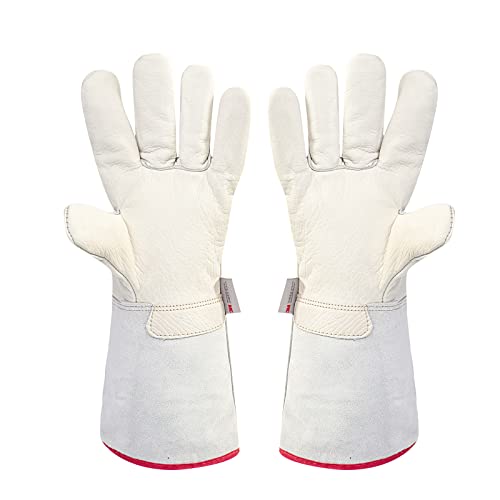
Sindayo 16 Inch Cryogenic Gloves protect hands in temperatures as low as -260°C (-436°F) with a wide applicable range up to +148°C (298°F). They feature a sponge and cotton inner layer for insulation but are not waterproof, so care must be taken when handling damp or wet cryogenic materials. These gloves are designed for cryogenic protection in liquid nitrogen, dry ice, and cold storage contexts, with emphasis on providing warmth and dexterity during long-term use in cold environments.
Sindayo Cryogenic Gloves 18 Inch

Sindayo’s 18 Inch Cryogenic Gloves extend protection further along the forearm, aiding in reducing exposure during longer handling sessions. They share the same core specifications as the 16 Inch version, including protection down to -260°C/-436°F and an antifreeze-capable range suitable for cryogenic work. The extended length is particularly advantageous in scenarios requiring additional forearm protection, such as larger storage containers or frequent reach-ins into cold environments.
MCR Ninja Ice Gloves

MCR Safety Ninja Ice Gloves feature an acrylic terry interior for warmth and a HPT (high-performance触感 protection) coating for resistance to liquids while maintaining grip in cold conditions. The coating remains flexible at temperatures as low as -58°F (-50°C), providing a balance of insulation and dexterity for handling wet or frozen items. These gloves are designed for practical cold-weather use, including labs, cold storage, and general cryogenic tasks where moisture is present and reliable grip is essential.
Buying Guide: Key Considerations for Cryogenic Glove Selection
Choosing the right glove for dry ice and liquid nitrogen work depends on several factors that balance safety, comfort, and practicality. Consider the following perspectives to ensure optimal protection and performance:
- Temperature rating: Look for gloves rated to at least -260°C (-436°F) if handling LN2 or dry ice. Some models specify a broader range; ensure the glove remains protective under your typical exposure conditions.
- Glove length: Longer gloves (14–18 inches) protect more of the forearm. For larger containers or frequent reach-ins, extended lengths reduce exposure in cryogenic tasks.
- Insulation and materials: Multi-layer insulation (inner sponge, cotton linings) improves warmth but may impact tactile sensitivity. Leather outer layers provide abrasion and puncture resistance, while some models use synthetic coatings for grip in wet conditions.
- Water resistance and dryness: Wet conditions can compromise antifreeze properties. If exposure to moisture is common, prioritize waterproof or water-resistant constructions, or plan for drying and storage after use.
- Durability and stitching: Double stitching and reinforced palms reduce wear over time, especially in repetitive tasks or rough handling of containers and racks.
- Dexterity vs. protection: Heavily insulated gloves often trade some dexterity for warmth. Assess the required grip and precision for your work to find a balanced option.
- Care and maintenance: Proper drying, storage, and drying out after use extend glove life. Some gloves require dry, ventilated storage away from moisture.
- Wet vs. dry scenarios: If your workflow includes wet cryogenic operations, prioritize gloves designed for moisture resistance and consider additional protective layers or sleeve extensions.
Leave a Reply