Best Cylinders for Log Splitters: Top 5 High-Performance Options
Selecting the right hydraulic cylinder is essential for efficient, reliable log splitting. The following five cylinders are among the best-performing options available, offering compatibility with most 22-25 ton and larger splitters, solid construction, and high-pressure ratings. Use this guide to compare specs, installation notes, and build quality to find the best match for your wood-splitting workload.
| Product | Brand | Key Specs | Approx. PSI | Notes |
|---|---|---|---|---|
| 4×24 Hydraulic Log Splitter Cylinder | AMRAP HYDRAULICS | 4″ Bore, 24″ Stroke, 1.75″ Rod | 3500 | Heavy-duty, universal fit |
| 4″ x 24″ Cylinder and Control Valve Kit | ToolTuff | 4″ bore, 24″ stroke, detent valve | 25 gpm flow limit | Complete kit for 22-25 ton splitters |
| MTD Log Splitter Cylinder | ToolTuff | 4.5″ bore, 24″ stroke | Unknown (as rated by label) | BD-rated for 27-30 tons |
| Magister Hydraulics 4×24 Cylinder | Magister Hydraulics | 4″ bore, 24″ stroke, 1.75″ rod | 3500 | Universal fit; heavy-duty |
| The ROP Shop Universal Cylinder | The ROP Shop | 4″ bore, 24″ stroke, 3/4 NPT ports | 3500 | Welded, rebuildable |
AMRAP HYDRAULICS 4×24 Log Splitter Cylinder

The AMRAP HYDRAULICS 4×24 Hydraulic Log Splitter Cylinder features a 4″ bore with a 24″ stroke and a 1.75″ rod, designed for high-pressure performance up to 3500 PSI. The welded double-acting design, heavy-duty steel construction, and corrosion-resistant seals support demanding outdoor use. Ports are 1/2″ NPT, and the unit includes solid dimensions (OD 4.5″, retracted length 34.5″, extended length 58.5″). This cylinder is built for compatibility with a wide range of log splitters through a universal fit, making it a common replacement choice for 22-25 ton models.
Key features: all-welded construction, high-strength seals, and robust bushings to minimize leakage. The cylinder is designed to handle heavy loads, with a claimed column load capacity around 36,000 lbs. This makes it suitable for consistently heavy workloads in wood processing or firewood preparation contexts. If you’re upgrading a worn cylinder, verify mounting hole spacing and port orientation match your machine’s configuration.
ToolTuff 4×24 Cylinder And Control Valve Kit

The ToolTuff kit combines a 4″ bore (4.5″ OD) x 24″ stroke cylinder with a control valve engineered for log splitters. The valve includes a detent on return for stable holding, and the kit specifies a 25 gpm flow limit to help match typical hydraulic systems. Included hoses and fittings offer a ready-to-install solution for 22-25 ton log splitters, with a focus on straightforward setup and reliable operation. Check port sizes and mounting patterns to ensure full compatibility with your machine.
MTD Log Splitter Cylinder (4.5″ Bore, 24″ Stroke)
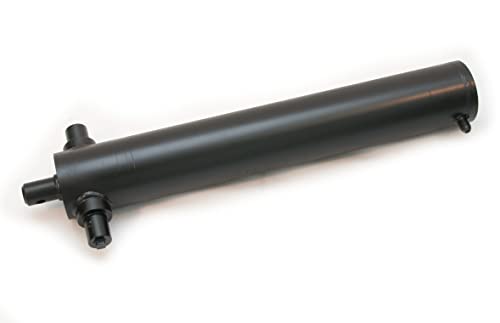
This model offers a larger 4.5″ bore (5″ OD) with a 24″ stroke, designed for higher tonnage applications in the 27-30 ton range. It utilizes a trunnion mount and aims to deliver robust performance with a heavy-duty build. The universal-fit claim suggests compatibility with many major brands, though mounting and port configurations should be verified prior to purchase to ensure a proper fit within your splitter’s framework.
Magister Hydraulics 4×24 Log Splitter Cylinder

The Magister Hydraulics 4×24 cylinder is a welded, double-acting ram designed for heavy-duty log splitting. With a 4″ bore and 24″ stroke, the unit is built to handle demanding wood-splitting scenarios and compatible with a broad range of brands. The cylinder’s body emphasizes corrosion resistance and durable seals to minimize leaks during extended use. It is positioned as a universal-fit option for common 22-25 ton splitters, delivering reliable power for repeated cycles.
The ROP Shop Universal 4×24 Cylinder

The ROP Shop universal hydraulic cylinder provides a 4″ bore with a 24″ stroke for log splitters in the 22-25 ton class. It features a welded design and double-acting operation with 3/4 NPT ports and 1-1/8″ pinholes for mounting. The unit is described as rebuildable, which can offer extended service life with proper maintenance. This cylinder aims to deliver dependable performance for standard splitter configurations, with emphasis on compatibility and ease of installation.
Buying Guide: Key Purchase Considerations
- Mounting compatibility: Verify bore size, rod diameter, mounting holdups, trunnion or clevis mounting, and hole spacing to ensure proper attachment to your splitter.
- Operating pressure and tonnage: Match the cylinder’s PSI rating to your splitter’s hydraulic system and the wood-splitting tonnage your workload demands. Most 22-25 ton splitters use cylinders rated around 3500 PSI; higher tonnage units may require larger bore sizes.
- Seal quality and material: Look for high-strength seals designed to resist extrusion, wear, and corrosion in outdoor environments. Rebuildable cylinders can offer longer service life with proper maintenance.
- Port size and configuration: Confirm port type (NPT), size, and thread orientation to ensure compatibility with your hoses and valves. 1/2″ vs 3/4″ NPT ports are common variants.
- Material and construction: All-welded, heavy-duty steel constructions provide durability under repeated cycles. Consider impact resistance, corrosion protection, and overall build quality for outdoor usage.
- Kit inclusions versus standalone: Some options come as complete kits (cylinder + control valve and fittings) which simplifies installation, while others are standalone parts requiring additional components.
- Replacement parts availability: If you rely on your splitter in demanding environments, ensure replacement seals, rods, and mounts are readily available from manufacturers.
When selecting a cylinder, align the product’s specifications with your splitter’s design—including mounting style, hydraulic flow compatibility, and maximum operating pressure. This helps optimize cycle speed, force, and longevity, reducing downtime and maintenance needs over time.
Leave a Reply