Best Actuator for Butterfly Valve: Top Pneumatic and Electric Options
Finding the right actuator for a butterfly valve involves balancing material compatibility, connection type, operating pressure, and control method. This guide highlights five reliable choices that suit sanitary and industrial applications, including stainless steel tri-clamp models and durable wafer-style electric actuators. Each option offers solid sealing, straightforward control, and range-appropriate actuation for 0–90 degree valve travel. Read on to compare features, performance, and installation considerations to help select the best fit for your system.
| Product | Brand | Connection | Actuation | Size |
|---|---|---|---|---|
| DERNORD 2 Inch Tri Clamp Sanitary Butterfly Valve, Pneumatic Actuator | DERNORD | Clamp | Pneumatic (Single Acting) | 2″ |
| BOKYWOX 2″ Sanitary Pneumatic Butterfly Valve | BOKYWOX | Clamp | Pneumatic (Single Acting) | 2″ |
| DERNORD 1.5 Inch Tri Clamp Sanitary Butterfly Valve | DERNORD | Clamp | Pneumatic (Single Acting) | 1.5″ |
| BOKYWOX 1.5″ Tri Clamp Sanitary Butterfly Valve | BOKYWOX | Clamp | Pneumatic (Single Acting) | 1.5″ |
| UNOX Butterfly Valve DN100 4″ with 24V DC Actuator | UNOX | Wafer | Electric (DC) | 4″ |
DERNORD 2 Inch Tri Clamp Sanitary Butterfly Valve

Valve material is SUS 304 stainless steel, suitable for sanitary lines. The valve uses a clamp connection and a 2″ port thread size, paired with a single-acting pneumatic actuator. It supports automatic return positioning and 0–90° travel with an air supply range of 5–7 bar (72–102 psi). This combination offers quick actuation in clean-in-place (CIP) or sterile environments, with robust corrosion resistance for media compatibility.
BOKYWOX 2″ Sanitary Pneumatic Butterfly Valve

Built from SUS 304 stainless steel with a clamp connection, this 2″ valve features a single-acting pneumatic actuator and automatic return position. Operating range is 0–90°, with a working pressure up to 232 psi (0–1.6 MPa). Temperatures are suitable for typical sanitary lines, with a maximum rated temperature around 212°F. The unit provides reliable, cleanable performance for process lines requiring rapid on/off control and dependable sealing.
DERNORD 1.5 Inch Tri Clamp Sanitary Butterfly Valve
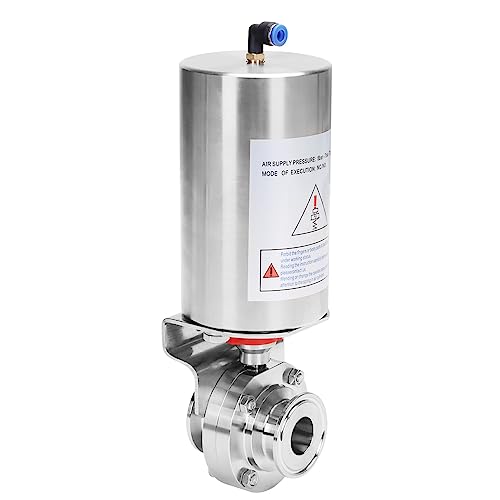
This 1.5″ DERNORD valve uses SUS304 stainless steel with a clamp connection and a single-acting pneumatic actuator. It offers a 0–90° travel range and an operating air pressure range of 5–7 bar (72–102 psi). Compatible with sanitary applications, it provides automatic return positioning and reliable performance in small-bore, CIP-compatible lines.
BOKYWOX 1.5″ Tri Clamp Sanitary Butterfly Valve
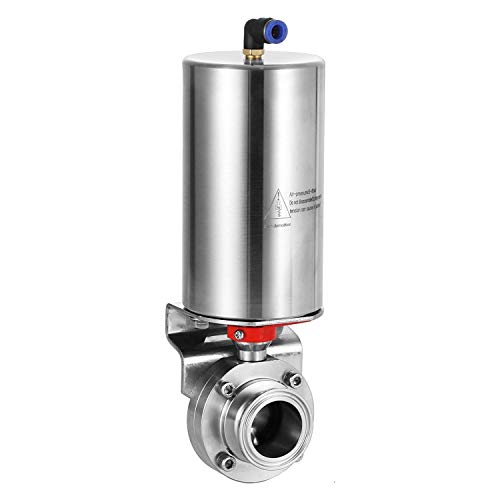
With SUS 304 stainless steel and a clamp connection, this 1.5″ valve uses a single-acting pneumatic actuator and automatic return positioning. It provides 0–90° travel with a working pressure up to 232 psi and a maximum temperature tolerance around 176°F. The design emphasizes sanitary compatibility and straightforward maintenance for small to mid-size process lines.
UNOX Butterfly Valve DN100 4″ with 24V DC Actuator

This wafer-type butterfly valve uses a GGG40.3 ductile iron body with an iron or stainless steel disc for durability and corrosion resistance. A 24V DC electric actuator provides low-voltage, precise flow control suitable for compact automation or mobile industrial setups. An EPDM gasket ensures reliable sealing across a wide temperature range, supporting leak-free operation in demanding environments.
UNOX Butterfly Valve DN80 3″ with 24V DC Actuator
This 3″ (DN80) version mirrors the same durability and low-voltage actuation benefits, featuring a GGG40.3 body and EPDM sealing. The 24V DC actuator enables safe control in automation systems with consistent performance under varying pressures and temperatures, making it well-suited for larger sanitary or industrial lines.
Buying Guide: Key Purchase Considerations
- Actuation type: Pneumatic vs. electric. Pneumatic soltex are fast and robust in clean environments but require reliable compressed air and filtration. Electric actuators offer precise control, easier integration with PLCs, and energy efficiency in tighter spaces, but may have higher upfront cost and heat considerations.
- Valve size and connection: Choose sizes (1.5″, 2″, 3″, 4″) that fit existing piping. Clamp/tri-clamp connections are common for sanitary lines, while wafer types suit compact assemblies. Verify port thread sizes and compatibility with your system.
- Material and compatibility: SUS304 stainless steel is standard for sanitary applications and corrosion resistance. For industrial use, ductile iron bodies (e.g., UNOX) add strength, but ensure gasket materials (EPDM) are compatible with the media.
- Operating pressure and temperature: Ensure the actuator supports your system’s working pressure and temperature ranges. Pneumatic systems listed here typically operate around 72–102 psi, while electric actuators rely on DC supply voltages and thermal limits.
- Control method and return positioning: Single-acting, automatic return positioning is common for sanitary lines requiring quick reset after actuation. Confirm the control scheme aligns with your automation logic and safety interlocks.
- Maintenance and cleanability: Stainless steel valves with clamp connections are easier to sanitize. Consider CIP/SIP compatibility if your process requires sterilization cycles.
- Delivery and installation: Check availability of replacement diaphragms, seals, and actuator serviceability. Ensure mounting compatibility with your valve body and upstream/downstream components.
These five options cover common sanitary and industrial use cases, balancing corrosion resistance, quick actuation, and reliable sealing. When selecting, map your process media, required travel, control architecture, and maintenance plan to the actuator’s specifications for steady, long-term operation.
Leave a Reply