Best 2 Part Epoxy for Concrete: Top Picks for Anchoring and Crack Repair
The right two-part epoxy can make concrete repairs and anchors hold strong, whether you’re fixing cracks, embedding rebar, or anchoring heavy fixtures. This guide reviews five reliable options, focusing on indoor/outdoor performance, cure times, temperature ranges, and suitability for vertical or damp environments. Each product is evaluated for concrete repair, anchoring strength, and ease of use to help you choose the best epoxy for your project.
Product Snapshot: The following table highlights the five Epoxy products covered, along with their primary strengths and applications. This quick reference helps you compare at a glance before diving into detailed product sections.
| Product | Brand | Best For | Key Strengths |
|---|---|---|---|
| PC-Concrete 72561 | PC Products | Anchoring and crack repair in damp environments | High-tack paste, moisture resistant, vertical applications, wide temperature range |
| DCP Quickmast Anchor E | DCP | Anchoring rebar, rods, and fixtures | 3–20 minute working time, fast curing to full capacity, dual cartridge |
| PC-Concrete Epoxy Adhesive Paste (102 oz) | PC Products | Large-volume anchoring and crack repair | Moisture resistance, indoor/outdoor use, broad temperature range |
| DCP Quickmast AE15 | DCP | High-strength anchoring for rebar and rods | 4–10 minute working time, rapid cure, 10.1 oz cartridge |
| FixMaster 9.5oz | FixMaster | General anchoring and crack repair | ICC compliant, high strength, interior/exterior use |
PC Products 72561 PC-Concrete Two-Part Epoxy Adhesive Paste
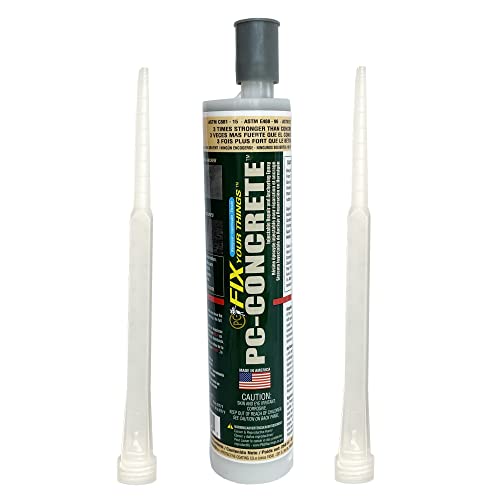
PC-Concrete 72561 is a two-part epoxy paste designed to fill cracks and anchor threaded rods, bolts, and dowels into concrete, grout-filled block, and unreinforced masonry. The high-tack formula resists moisture, enabling vertical applications and damp environments. It supports indoor and outdoor use with an application temperature range from 35 to 115 degrees Fahrenheit and a service range from -20 to +115 degrees Fahrenheit. Ideal for masonry repairs and structural anchors in partially humid sites, its paste consistency minimizes drips and sag on vertical surfaces, making it suitable for both repair work and new installations.
DCP Quickmast Anchor E Concrete Anchoring Epoxy

DCP Quickmast Anchor E is a two-part epoxy system with a dual cartridge design, designed to anchor rebar, threaded rods, and fixtures in concrete. It offers an extended working time of 3 to 20 minutes to allow precise placement, reducing the need for adjustments or redrilling. The product cures rapidly to full load capacity between 3 and 24 hours, enabling faster project progression. This makes it suitable for projects where reliable anchoring and quick throughput matter, such as commercial installations or multi-location upgrades where downtime must be minimized.
PC-Concrete Epoxy Adhesive Paste (102 oz)

This two-part epoxy paste comes in two pails totaling 102 ounces, designed for anchoring and crack repair in concrete. It shares the same moisture resistance and vertical applicability as the smaller 72561 variant, with an indoor/outdoor suitability and a broad 35 to 115 degrees Fahrenheit application window. The extended volume is ideal for larger repair jobs or multiple anchors in one session, providing consistent performance across extended projects while maintaining strong adhesion to concrete, grout-filled blocks, and unreinforced masonry.
DCP Quickmast AE15 Concrete Epoxy for Rebar and Rods

Quickmast AE15 is a high-strength anchoring epoxy acrylate, designed for secure fastenings in concrete for rebar, threaded rods, and other anchoring needs. The system includes a 10.1 fl oz cartridge and nozzles for easy application with standard caulking guns. It offers a 4 to 10-minute working time and cures rapidly to full load-bearing capacity in 40 to 145 minutes depending on base temperature, supporting both light and heavy-duty applications with efficient project flow and reduced downtime.
FixMaster Multi Purpose 2-Part Epoxy 9.5oz

FixMaster’s 2-part epoxy is formulated for anchoring and crack repair with high strength and durability. It is ICC compliant and suitable for a variety of substrates, including concrete and masonry. The product is designed for interior and exterior use, and it supports horizontal, vertical, and overhead applications. An included extra nozzle aids reuse for multiple jobs, and the epoxy is engineered to resist moisture and temperature changes, supporting long-term performance in varied environments.
Buying Guide: Key Purchase Considerations
- Substrate compatibility: Choose an epoxy designed for concrete and masonry, particularly if you’ll encounter grout-filled blocks or mixed substrates. Some formulations also handle damp or wet surfaces, which is essential for basements, garages, or exterior foundations.
- Bond strength and load capacity: For structural anchors and heavy fixtures, prioritize products marketed for high-strength anchoring and rapid curing times to minimize downtime and ensure safe load capacity.
- Working time vs. cure time: A longer working time can help with precise placement, but faster cures speed up project completion. If you need to reduce downtime for a commercial site, select a product with a short cure window but adequate working time.
- Temperature range: Consider indoor vs. outdoor use and seasonal temperature variations. Look for products with broad application and service temperature ranges to handle cold winters or hot summers without performance loss.
- Vertical and overhead applications: For repairs on vertical surfaces, a high-tack paste or thick adhesive helps prevent sagging before curing. Some products are explicitly designed for vertical installations.
- Moisture resistance: In damp environments, moisture resistance improves bond reliability. Epoxies formulated to resist moisture are less prone to weak bonds in basements, bathrooms, or exterior foundations.
- Mix ratio and nozzle compatibility: Ensure the product’s cartridge or two-pour system fits your tools (caulking gun, mixer, etc.). A clear nozzle layout can speed up setup and reduce waste.
- Regulatory compliance and certifications: ICC, ASTM, and other certifications indicate adherence to building codes and performance standards, which can be important for professional projects or rental property maintenance.
- Volume and coverage: For large repairs or multiple anchors, larger volumes (like 102 oz kits) provide cost efficiency and reduce the risk of inconsistent mixes across batches.
- Safety and handling: Review safety data for ventilation requirements, skin contact precautions, and curing odors to plan proper use and PPE.
When selecting a two-part epoxy for concrete, balance the project scale, environmental conditions, and required cure time. For damp or vertical installs, prioritize high-tack, moisture-resistant formulations. For anchors and heavy loads, verify that the product claims robust strength and rapid curing compatible with your schedule. The five options reviewed here offer a range of strengths, from general crack repair to high-load anchoring, to help you identify a practical choice for both DIY and professional applications.
Leave a Reply